Travel | Yoga - books that inform & ignite my practice
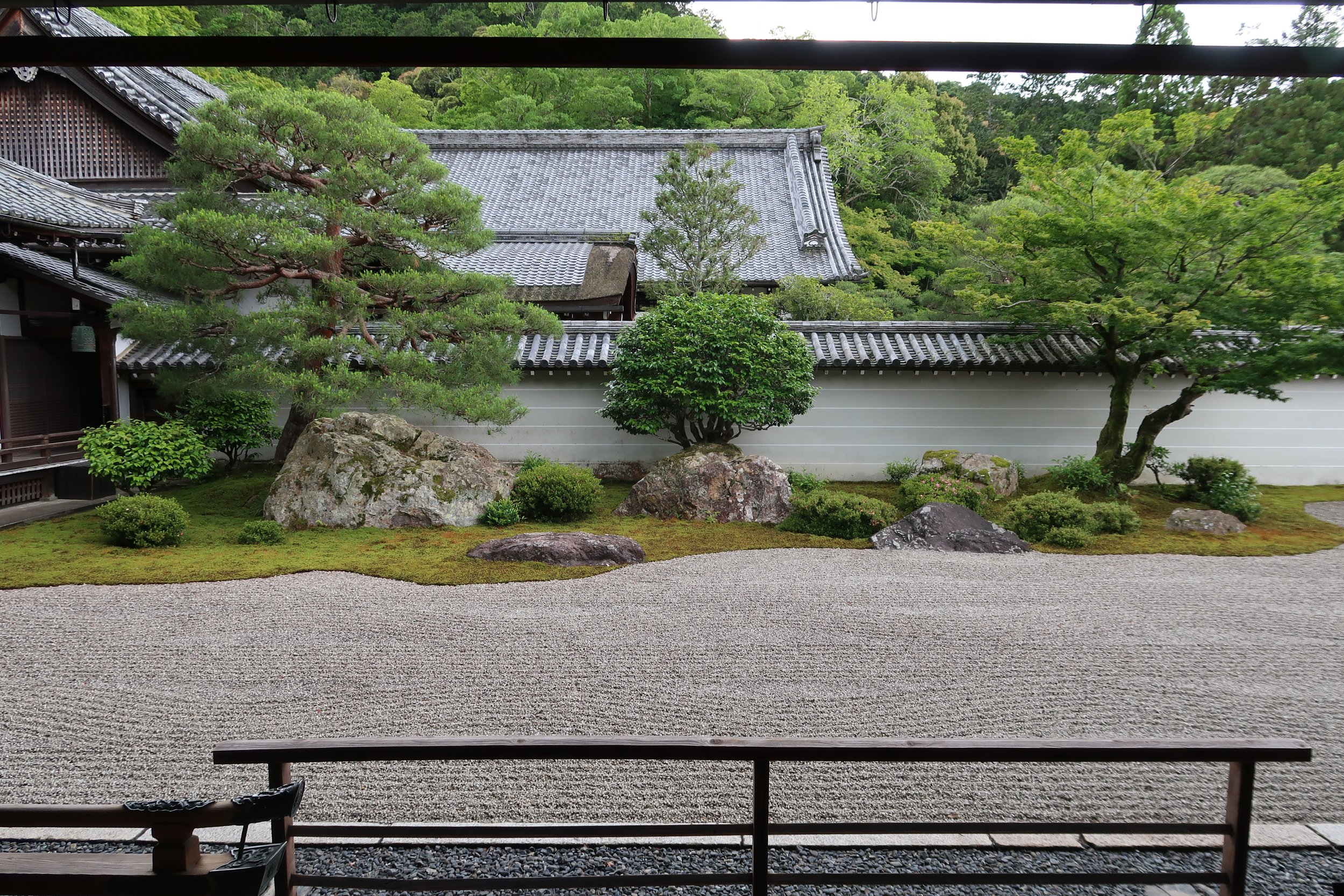
June 2024 ~ Nanzen-Ji Hojo garden (created in1624-44), is a vast complex serving as a head temple of Rinzai Zen Buddhism - located at the base of the Higashiyama mountains, Kyoto. I spent the entire day at the well preserved site, where I had found the surrounding gardens and trails had a moody yet enveloping atmosphere. This serene nook pictured is known as the ‘Tiger Cub Garden’ (toranoko-watashi-no-niwa), thanks to a famous interpretation of the stones structural similarity to a tigress and her cubs ! Unsurprisingly it is designated as a national Place of Scenic Beauty. Designed as a karesansui dry landscape garden, it was created in the early Edo period by the tea master Kobori Enshu.
‘ If you wish to know the road up the mountain,
you must ask the man
who goes back and forth on it.’
~ Zenrin Kushu, ‘Anthology of Phrases from the Zen Forest,’ a collection of poetry and haiku used in Rinzai Zen Koan Training.
~
This post is inspired by the May edition of the KiMaya Journal Monthly Letter, where our theme of contemplation touches on the essence of what it means ‘to know wisdom.’ Through sharing this monthly focus through a lens of yoga philosophy with suggested practices to explore, it dawned how the nature of my own journey of studentship has evolved while continuing to delve deeper into this dynamic travel focused ‘season’ of life - thanks to the subtle guidance embedded inside the pages of diverse practice compendiums encouraging embodied inquiry, and therefore have come to consider as my ‘wise counsel ’ along the way.
Although these books had been allocated to take up not only a special amount of space but also encompass a significant weight towards my 70L backpack (!), I have no doubt the same pages would be picked and packed if I were to have known beforehand how long I’d be moving around with them. Having initially relished the idea of having ample time to read and comb through them systematically, in reality they have felt like familiar company whilst on the road - like ‘travelling teachers’ accompanying me, there for when I feel to ‘reach out’ when questions arise through sadhana. The zenrin kushu excerpt above has an effect of a riddle, as is the nature of Zen Koans - which are also known to provide no obvious ‘correct’ meaning. It reminds me of the teachings of Yoga, and how personal experience of practice is vital to gaining direct perception of knowledge. As there are many paths of Yoga, with the four main paths presented as ; Bhakti yoga (of devotion), Karma yoga (of action/selfless service), Jnana (of intellect), Raja Yoga (Patanjali Ashtanga Yoga system/mental mastery). If we consider the root meaning of Yoga to mean union/to unite/equanimity with reality, then each path could be seen as focusing on elements within the human experience that honour the diversity of learning styles, preferences and accessibility - influencing which path a practitioner explores at any given time or another. This is to say, that the heart (bhakti yoga), mind (jnana yoga), movement (karma yoga) and an integrated approach of all (raja yoga) are focused ways of integrating / realising oneself throughout the course of a lifetime. Just as the human bodily system requires harmonious functioning of all parts in order to perform with easy and strength, so do the elements of each yogic path contribute to the overall necessity of awakening differing ‘muscles’ of consciousness. Just as nature’s seasonality brings forth new elements of perspective and ways of living, I invite that we too honour the treasures abound in our own seasonal cycles that may differentiate with flux ad flow, for example as ; leaning into a more physically demanding practice to establish and develop understanding of physiological limitations / to increasing capacity, or maybe its a season of life where restorative and slower paced practices offer a challenge mentally and emotionally, even the desire to become a formal student again to brush against the minds of others whilst expanding from new angles of teachings may nourish the mind and soul in unexpected way, and etc… As each individual comes into this life carrying their own unique natures and proclivities, we must remember to be mindful of each unique individual we cross paths with, as we certainly are not equipped to know their ‘path’ more so than them. Whether it is through books, singing bhajans, or navigating coordination through bodily movement - there are times when it is required to learn by listening, reading/observing, exchanging ideas or doing/being. I invite you to take a moment to inquire as to how best you learn ? & How do you come to understand the meaning of the zen koan above ?…
Over the period of time I was to be away from my homeland, the below books have served as reliable foundational texts to reference in classes, workshops, retreats and personal inquiry. I don’t think I anticipated how much they would eventually serve as ; wise counsel through my experiential ways of ‘unpacking’ the teachings, as sparks of invitation and reminders of my souls goal, as anchor points of moral stability for when foreign living would have me healthily question the ways of others as well as my own attitudes of beliefs, and that have also served as tangible sources of motivation that would flow to others looking to access and take note of the universal principles of practices embedded within them. Currently, at this space in time I find myself in transition amidst my continued travels since first packing them, and still I have gathered a new found sense of gratitude for the supportive invitations of inquiry they offer in sustaining, and further nurturing my ideas of inspirations into actions throughout the unpredictable nature of what awaits ahead.
…Understand and inspire the mental, integrate and express through the physical…
This is not a reading list of new and bestseller releases. These are cherished texts loved and referred to by many people from all walks of life, often approached as resources for the curious ‘seeker’ or ‘spiritual practitioner.’ And although this may be true, I find that within the pages of all these books one way or another can offer a whisper of value to anyone who - just like the authors, have been curious and open to learning the nature of life, and the art of living it fully, harmoniously in a non-sectarian way. They contain a wellspring of knowledge that only increases in depth when returned to again and again - as several teachers across many methods of practice have made a point during a class or training, which was “to never underestimate the beauty of coming back to the ‘teachings’ as you will always discover something new.” There must be some truth in this because how many times have I (we ?) thought ‘ wow, that’s it - I see, now I know what it means…! ’ only to then realise after space, time and experience that the once familiar and ‘figured out’ concept / idea / technique or posture, has once again become an entirely new and maybe exciting experience to unpack and integrate all over again.
It must also be said that in a world where information is everywhere, there is something beautifully calming and simple about having a small capsule collection/diverse selection of inspiration that intend to serve as infinite wells of wisdom. Perhaps my sharing this list inspires you to also take stock of your current reading pile or bookshelf, and to take a moment of gratitude for contributing through purchase, supporting of authors taking a courageous leap to put words to paper what is often held in the body, heart and minds of others who have so affectionately thought and felt these very sentiments inside themselves.
I thank all the wisdom threads of experience from the many seekers who have weaved so reverently the nature of their own learnings and inquiry, and who contributed in forming the below texts :
The Yoga Sutras of Patanjali ~ there are multiple versions. Notable translations with commentary I recommend are by Sri Swami Satchidananda and, another by Edwin Bryant. The Yoga Sutras were created with the intention to systematise and make accessible the compilation of yoga teachings somewhere between 200-500 CE. The goal and path of Yoga are made clear by the Indian Sage Patanjali and is presented as a personable, practical and step by step approach via the 196 aphorisms - systematising both the tangible and intangible teachings. Depending on the translator/scholar, the language of comments can be quite poetic with real life examples and also short and direct outlines of this laid out approach to self-mastery. It’s worth noting that the sutras contain a sense of mystery and were purposefully presented as inqueries for the practitioner to explore themselves as opposed to being spoon fed the meaning. This is why traditionally, a ‘guru’ or what is known as a highly self-experienced teacher/mentor is required to expand ones perspective of understanding and guidance through this foundational text.
Tao Te Ching ~ the work of Lao Tzu has many translations. I chose a smaller thin sized book translated by Jonathan Star. The Tao Te Ching and Taoism serves as one of the foundational pillars of Traditional Chinese Medicine. It is estimated to have been written around 500 B.C or even earlier. Throughout my reading I have found that the 81 verses shared infuse reverence to the poetic nature of lifes mystery and universality of experiencing it. It is a beautiful compendium to meditate on and to me it reads as if there is an echo carried by a wind that cannot be harnessed and heard - a mystery of intangible instructions indeed.
The Bhagavad Gita ~ there are multiple versions. Notable translations with commentary I recommend are by Sri Swami Satchidananda and, another by Edwin Bryant. Included in the body of work within the ancient Indian scriptures known as ‘vedas’, The Bhagavad Gita is written as a poetic verse and in itself is an excerpt from an Indian classical literature, the story of ‘The Mahabharata.’ It is an epic poem, and happens to be written as song in the form of Sanskrit shlokas - wherein each of the 700 shlokas were traditionally read, learned and taught by expressing sound via singing within the oral traditions. The reciting of shlokas is a practice in itself that can support the process of mental clarity, in resonating with the vibration of the language in itself. During modules within teacher training [ as experienced with Keith Kempis from Bija Yoga] our cohort had the pleasure of studying a handful of thought provoking shlokas which we were integrated with the traditions of singing them in rhythm. I am grateful for the version presented by Sri Swami Satchidananda as I feel the delight and devotion that forms the essence of the words. The verses and commentary are beautifully practical and include modern day examples of application.
Yoga Mind, Body & Spirit - A Return to Wholeness ~ by Donna Farhi. Known affectionately as the teacher of teachers, this book forms a modern and intricately respectful explorative approach to experimenting with the principles of Yoga in an embodied and nurturing tone. It is an incredibly practical guide that weaves many facets of the practice together in a poetic way that only experiential and academic contemplation alongside depth of integration can convey. Personally it offers practitioners inspiration, alternative lens and angles to experience their practice - one layered with loving self-inquiry and intelligent movement.
Eastern Body, Western Mind - Psychology and the Chakra System as a Path to the Self ~ by Anodea Judith. Originally published in 1966, this book explores the psychology of the chakras through layering the lens of both eastern and western psychological/spiritual framework - giving structure and symbolism to the chakras. The depth upon which Anodea Judith correlates the relational aspects of childhood development and jungian psychology to the esoteric and metaphysical sciences of the chakra system create a clear presentation - a direct map, as to how this methodology can contribute to self-healing and personal growth. Three basic threads of intention underpin the philosophical exploration ; Enlightenment philosophies, Embodiment philosophies & Integrative Philosophies. If you also find yourself relating to the more subtle, energetic forces that govern your state of being, this is an in-depth structure of organisation to explore with.
Yoga Nidra ~ By Swami Satyananda Saraswati. As a student of Swami Sivananda Saraswati, the author of this book delved deeper into the science of Yoga Nidra after experiencing direct benefits and also witnessing benefits in multiple settings from ashrams to jail. With the belief that this was a path to pursue deeper, Yoga Nidra was formally created in a systematic method for transformation and self-realisation. Swami Satyananda Saraswati makes it clear that he did not ‘create’ Yoga Nidra, but has added to the powerful ancient tantric techniques that already had roots of conscious relaxation practices. Honouring these roots, and modifying parameters for structured practice gave birth to a new construction, the now called system of ‘ Yoga Nidra.’ This book is a complete resource for the revised practice of Yoga Nidra, focusing on identifying the relationship between the tensions and illnesses of the western world, with sources of scientific support specifically performed to measure the powerful impact this practice of self-induces conscious rest can provide.
~
|“The more that you read, the more things you will know. The more that you learn, the more places you’ll go.” | Dr. Seuss
…
*Thank you for coming this far - if you enjoyed reading this article Sign Up to the KiMaya Journal Monthly Newsletter. There’s much more to be explored together HERE.
*Holistic/alternative health & Yoga practices are available with me. Book a 1:1 session through the Wellness Services offered HERE.
…